Eve of Destruction
On display at the 50th Philadelphia Museum of Art Contemporary Craft Show, running November 6–8, 2026.

On display at the 50th Philadelphia Museum of Art Contemporary Craft Show, running November 6–8, 2026.
Borosilicate glass, currency
2026
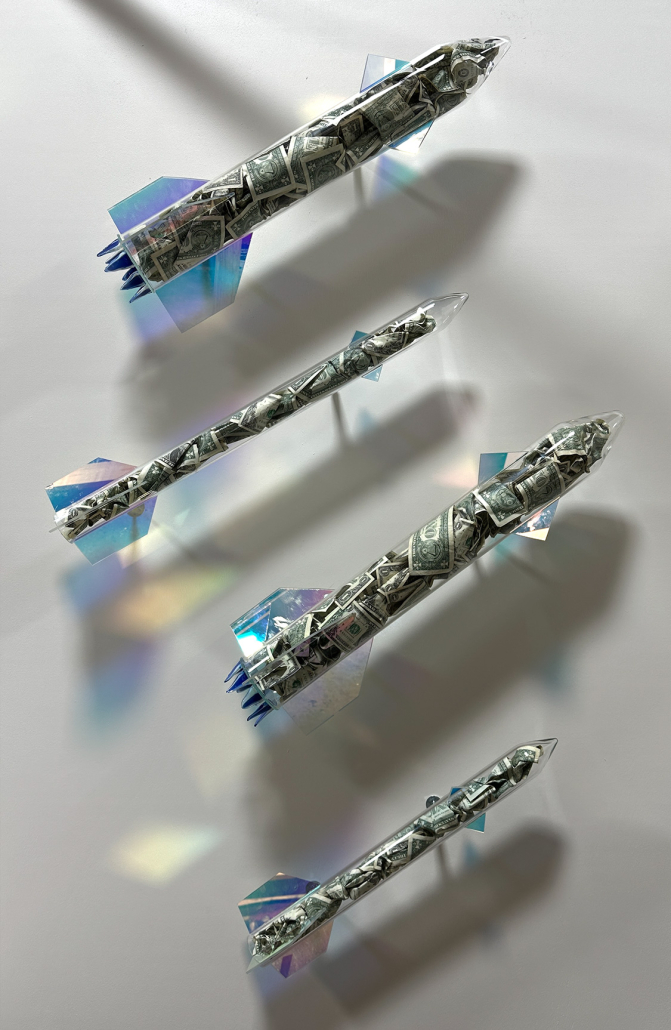
Rocket Fuel considers the military-industrial complex and the direction of our collective investment. While public services go without, our government can find money for war. Scientific innovation itself is often funded by the military, so our ingenuity is often directed toward power, control, and domination. Even the rocket is a way to make money. In that system, killing can become profitable, while saving lives and building a society where people can thrive are treated as secondary.
What if we invested differently? Imagine a society committed to people’s well-being that could make people safer, motivated, and more inventive. With more needs to meet, we might discover more ways to meet them. Our capacity for innovation could take us further than the weapons we build.
Borosilicate glass, copper wire
2026
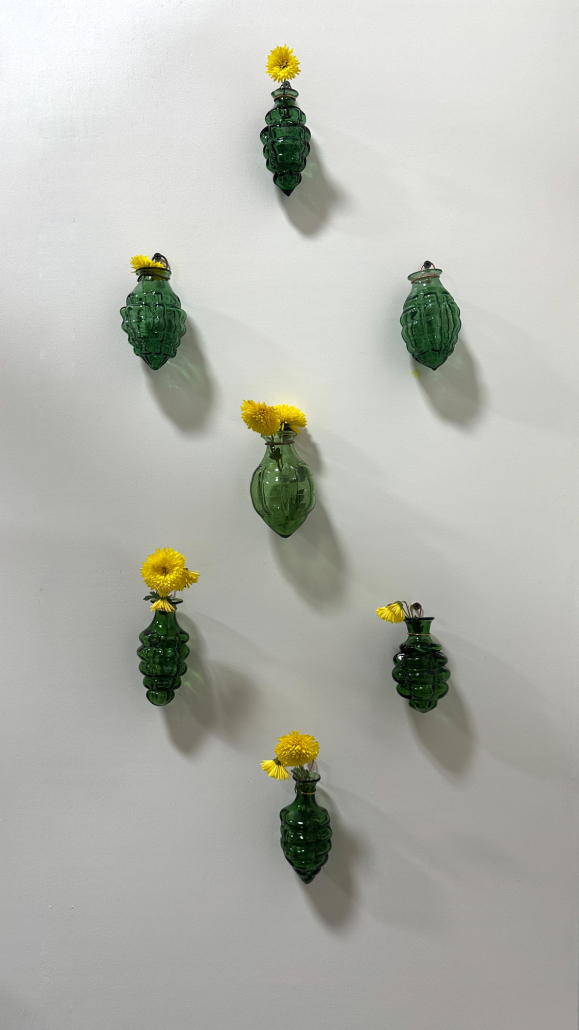
Delayed Reaction holds the grenade and the flower in tension: an ugly instrument of war beside a symbol of beauty and care. The grenade is designed to wound, not simply to kill. Its violence exploits a human instinct: when someone nearby is hurt, others stop fighting to help, leaving themselves more vulnerable. The flower transforms its appearance, making the instrument of violence seem beautiful, even acceptable. Yet the violence remains. The contrast reflects how war can be presented in a polished, romanticized way, while families bear the loss of those they love.
Borosilicate glass, wood, water
2026
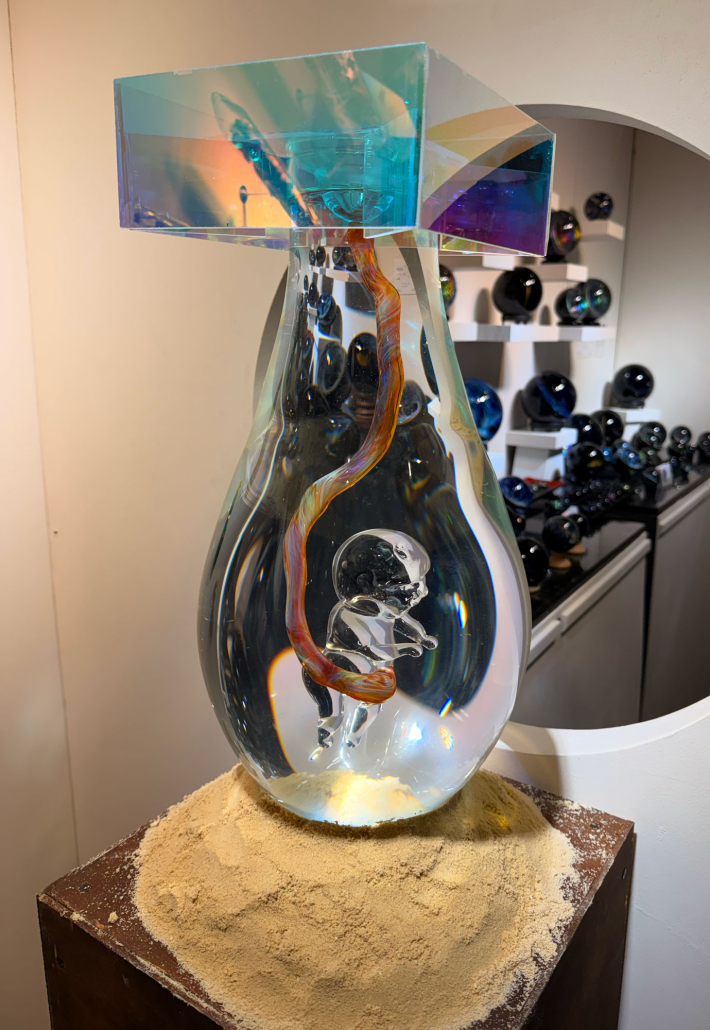
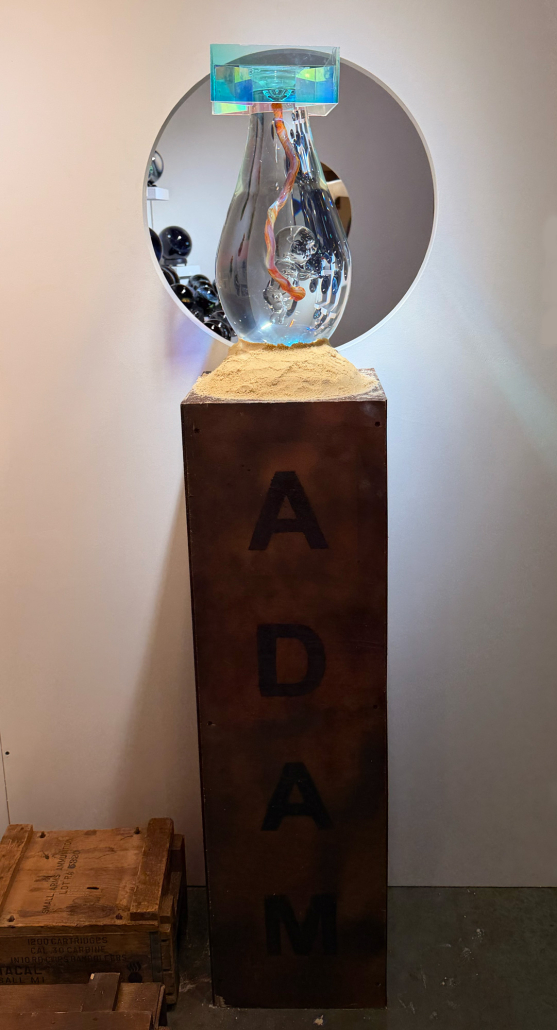
Adam Bomb (Eve of Destruction) explores the fracture between the person taught to care for others and the fighter expected to kill. At eighteen, ideals of empathy and restraint can be replaced by demands to fight, maim, and set aside the values of childhood. What begins as an honorable cause may later reveal the other side as ordinary people, while power and wealth shape the decisions that send others to battle. War’s destruction reaches beyond the person who fights. It divides the self and alters the lives of those who accept and love the returning soldier. The male and female figures are bound in that damage; everyone pays.
Borosilicate glass, foam, plaster, paint
2026
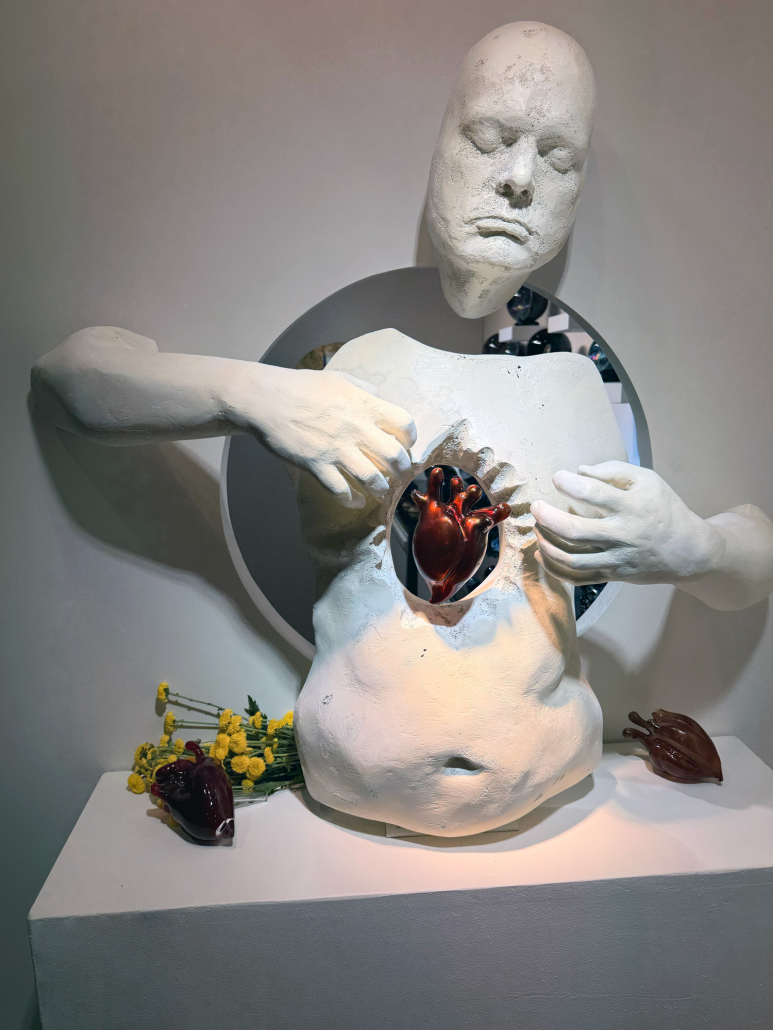
Take It begins with the painful contradiction of opening the heart to someone who has lost trust. The exposed heart becomes both an offering and an injury: a desperate attempt to make love visible, to reassure another person, and to be loved in return. When the heart is not accepted, the wound remains, not only in the body, but in the world left behind. Its openness holds both vulnerability and abandonment within.
Borosilicate glass
2026
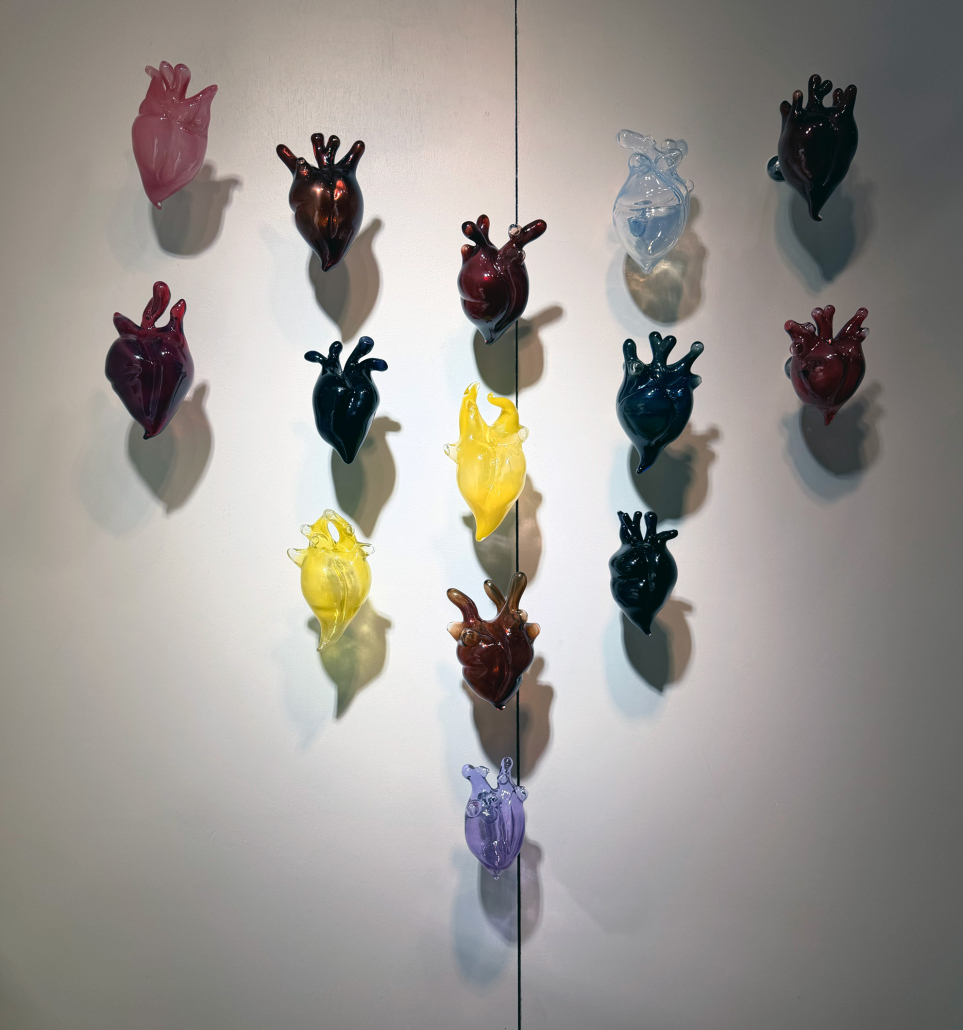
Replace It traces the cost of reshaping oneself in pursuit of love. The hearts stand for a longing to be accepted so intense that another person’s idea of what was worthy could take the place of one’s own. What kind of heart would have been enough, and who gets to decide? Beneath the repeated questions of whether one could be smarter, stronger, or more successful lies a deeper question: when love feels conditional, how much of the self can be changed before it is no longer one’s own? The hearts remain witnesses to that bargain. The damage is not erased. What remains is a fragile opening through which it can still be seen.
Borosilicate glass
2026
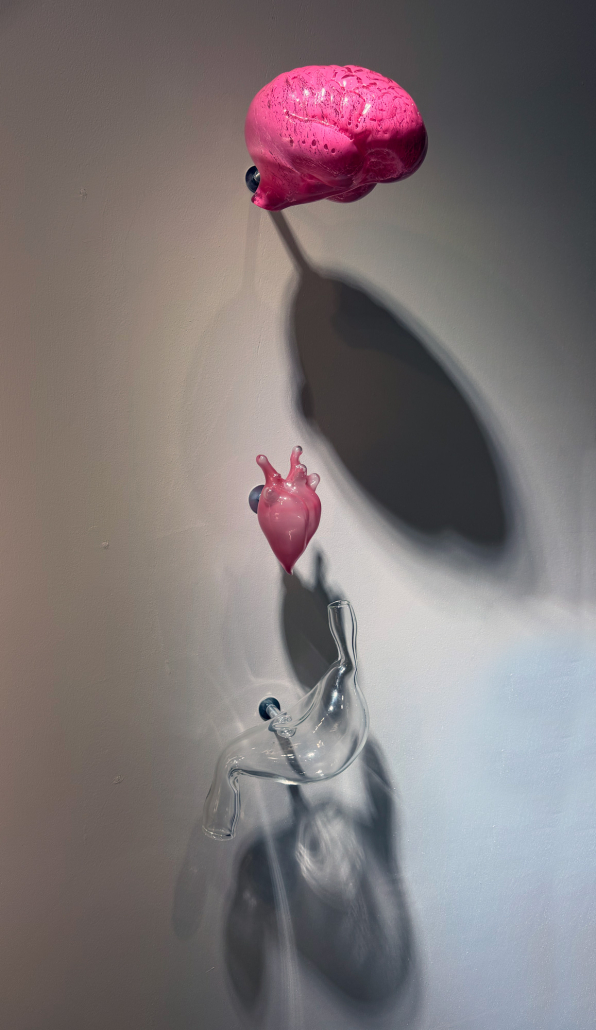
Internal Unseen Damage stands at human height, while the rest of the body falls away. Suspended in the space where a body would be, these three centers of thought, feeling, and instinct become a portrait of damage invisible from the outside. At different moments, one may lead while the others recede. Together, they shape perception, response, and decision. Their balance is never fixed. Yet, deception can fracture the balance between them. A reality once trusted gives way, and the shock moves through the body: the mind is wounded, the heart follows, and the gut carries the strain, all beneath the surface.